When ChatGPT ignited the enterprise generative AI boom, the software industry saw an explosion of dedicated, specialized vector database vendors: Pinecone, Weaviate, Qdrant, Chroma, and Milvus. Venture capital flowed into marketing campaigns declaring that relational databases were obsolete for modern AI workloads.
Two years later, engineering teams who adopted standalone vector databases are discovering the hidden operational debt: data synchronization delays, two separate database permission models, split backups, and hefty monthly cloud bills. Meanwhile, teams that reached for PostgreSQL with the open-source pgvector extension are shipping faster with zero extra infrastructure.
1. The Vector Database Craze: Reality vs. Hype
Dedicated vector engines excel at a very specific scenario: searching across 500 million to 1 billion+ high-dimensional vectors with sub-second nearest-neighbor graphs in a multi-tenant cloud environment.
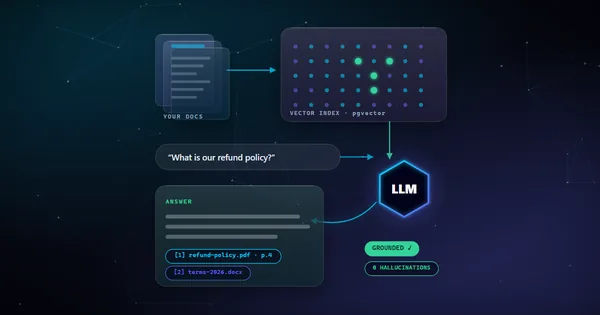
However, the vast majority of B2B applications, internal RAG copilots, legal document search tools, and e-commerce catalogs store between 50,000 and 5,000,000 embeddings. At this scale, spinning up a separate vector cluster is textbook premature optimization.
2. The Operational Advantage of pgvector
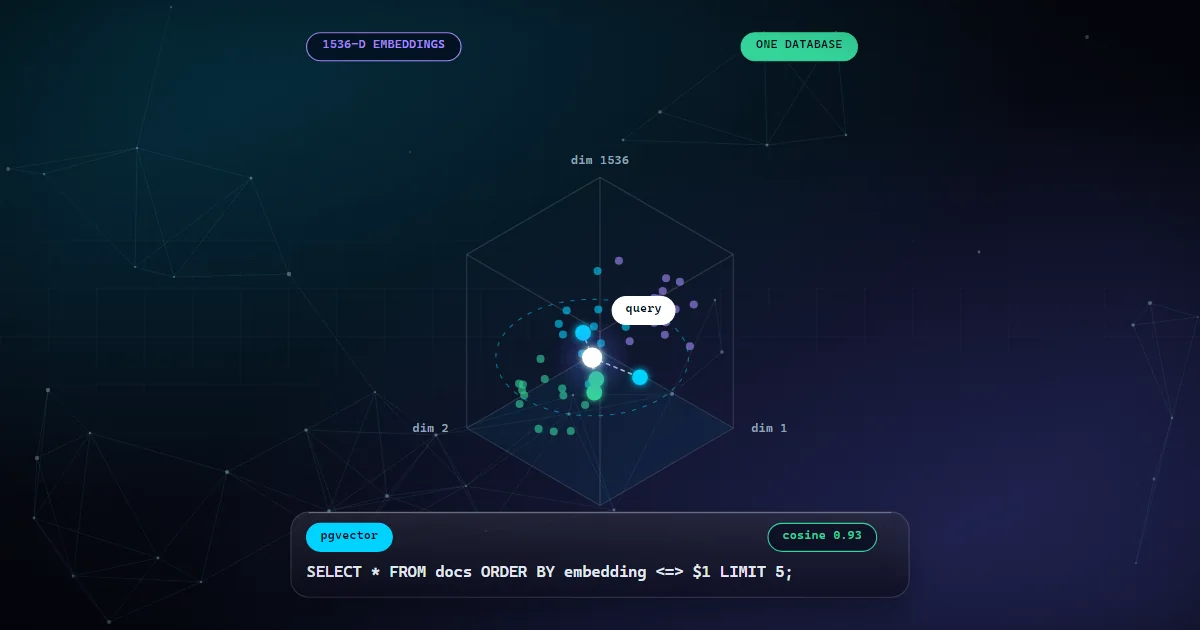
With pgvector, vector embeddings become just another column type inside your existing relational PostgreSQL tables:
DELETE FROM documents WHERE user_id = $1 deletes the document, its metadata, and its vector embedding in an atomic ACID transaction.
3. HNSW vs. IVFFlat Indexing in PostgreSQL
Early versions of pgvector only supported ivfflat indexing, which suffered from slow index build times and lower recall. Today, pgvector natively supports HNSW (Hierarchical Navigable Small World) graphs, delivering state-of-the-art recall and sub-10ms query latency:
-- Enable the extension
CREATE EXTENSION IF NOT EXISTS vector;

-- Define a table combining relational business data with vector embeddings
CREATE TABLE knowledge_chunks (
    id UUID PRIMARY KEY DEFAULT gen_random_uuid(),
    workspace_id UUID NOT NULL REFERENCES workspaces(id) ON DELETE CASCADE,
    document_title TEXT NOT NULL,
    chunk_content TEXT NOT NULL,
    access_role VARCHAR(32) DEFAULT 'member',
    embedding vector(1536), -- OpenAI text-embedding-3-small dimension
    created_at TIMESTAMPTZ DEFAULT NOW()
);

-- Build a high-performance HNSW index using cosine distance
CREATE INDEX idx_chunks_hnsw
ON knowledge_chunks
USING hnsw (embedding vector_cosine_ops)
WITH (m = 16, ef_construction = 64);
4. Relational Metadata Filtering in a Single Query
The fatal flaw of dedicated vector databases is metadata filtering. In enterprise RAG, you rarely search the entire global vector index. You must filter by workspace_id, verify the user has access_role = 'admin', and exclude documents created before a certain timestamp.
In dedicated vector stores, "pre-filtering" often degrades nearest-neighbor graph traversal, causing queries to crawl or miss relevant neighbors. In PostgreSQL, the battle-tested query planner seamlessly combines the HNSW vector index with existing B-tree indexes:
-- Sub-10ms semantic search with relational security filtering
SELECT
    document_title,
    chunk_content,
    1 - (embedding <=> $1) AS similarity_score
FROM knowledge_chunks
WHERE workspace_id = $2
  AND access_role IN ('member', 'public')
ORDER BY embedding <=> $1
LIMIT 5;
5. Real-World Benchmarks & When You Truly Need a Dedicated Engine
When should you actually consider migrating away from pgvector?
- When vector count exceeds 20M–50M+: At extreme volume, the RAM footprint required to hold HNSW graphs in memory begins to strain standard Postgres shared buffers.
- When write throughput exceeds 5,000 embeddings/sec: Building and mutating massive HNSW graphs under heavy concurrent writes can impact write latency.
- For all other workloads: PostgreSQL with pgvector gives you automated point-in-time recovery, connection pooling with PgBouncer, row-level security (RLS), and zero additional monthly database subscriptions.