
1. Introduction to Semantic Search
Semantic search is a transformative approach in information retrieval that understands the intent behind queries. It leverages embeddings and vector representations to capture semantic relationships, thus providing more relevant search results compared to traditional keyword-based search.
2. Understanding pgvector in PostgreSQL
Pgvector is an extension for PostgreSQL that allows the storage and retrieval of vector embeddings directly within the database. This enables semantic search capabilities by leveraging the powerful querying capabilities of PostgreSQL.
3. Setting Up pgvector
Setting up pgvector involves installing the extension and creating a table schema that supports vector data types. This process is straightforward and taps into PostgreSQL's existing infrastructure.
CREATE EXTENSION IF NOT EXISTS vector;Once installed, vectors can be indexed for fast retrieval, providing powerful search capabilities.
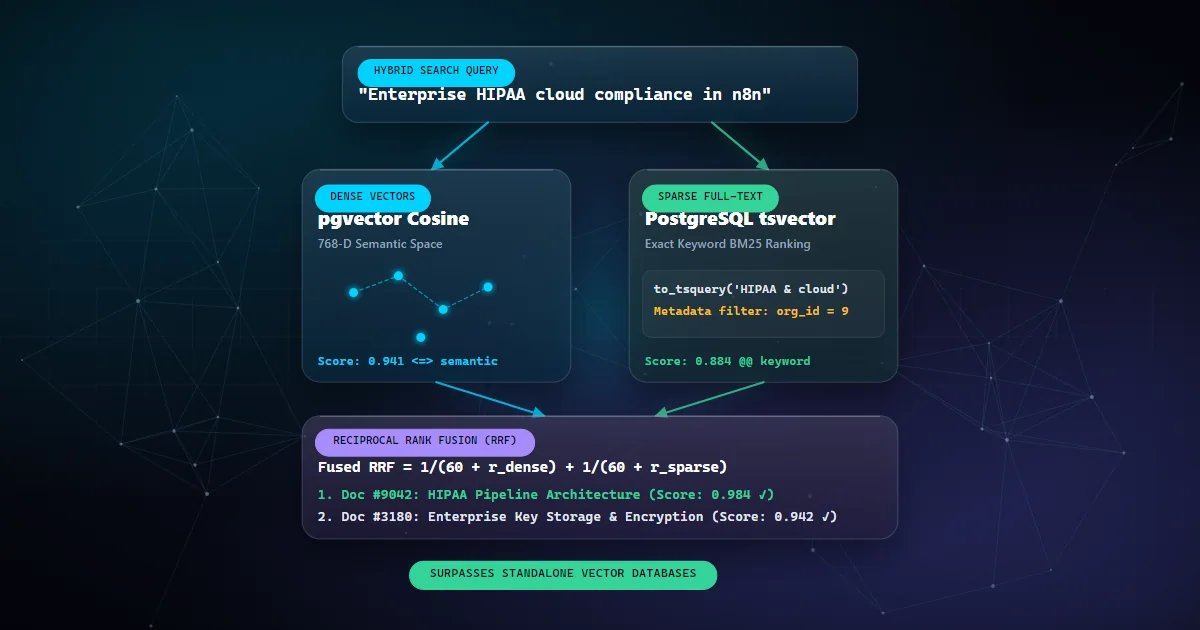
4. Hybrid Search Architecture
A hybrid search architecture combines semantic search with traditional search methods, creating a balanced system that leverages the strengths of both. Using PostgreSQL and pgvector, you can implement such an architecture efficiently, ensuring scalable and robust search functionality.
5. Advantages Over Dedicated Vector Databases
Using PostgreSQL with pgvector offers several advantages over dedicated vector databases. These include reduced costs, enhanced data security, and greater integration flexibility. The unified system benefits from PostgreSQL's rich ecosystem and tools, making it a compelling choice for enterprises.