1. Introduction to the Dilemma
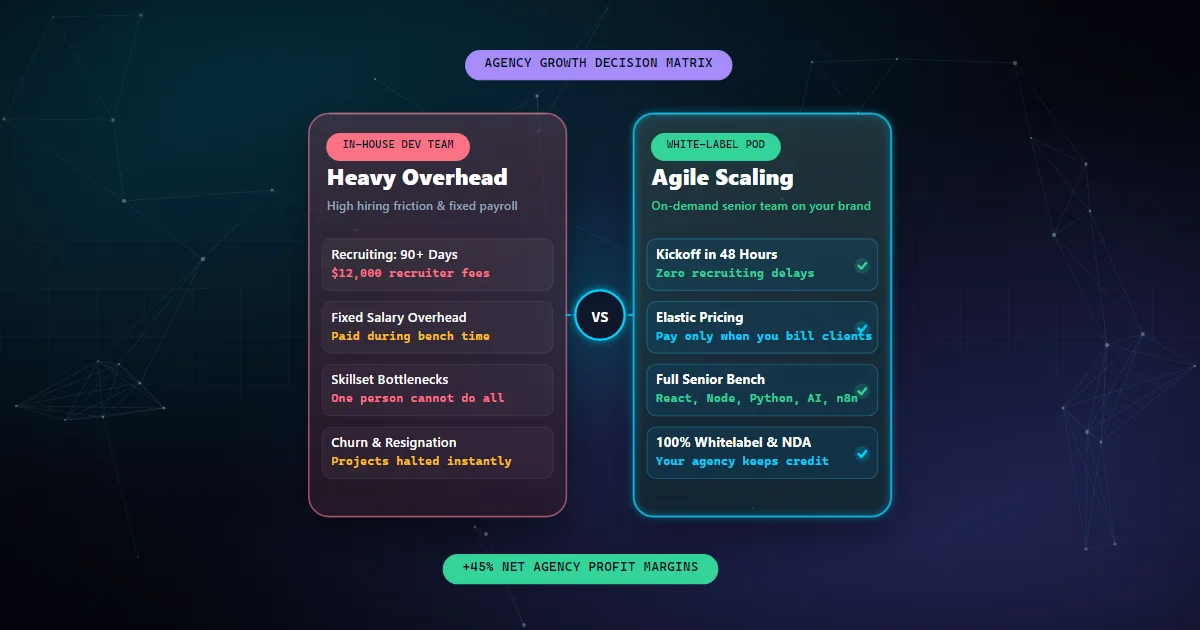
As agencies scale, the decision between building in-house development capabilities and leveraging dedicated white-label engineering teams becomes crucial. Each approach has its own set of advantages and challenges that can significantly impact the agency's ability to deliver projects on time and within budget.
2. In-House Development Teams
In-house development teams provide direct control over the project management and development process. They facilitate deeper integration with the company culture and ensure that the technical knowledge remains within the organization. However, this approach involves significant fixed costs, including salaries, benefits, and infrastructure, along with the complexities of recruitment and team management.
3. White-Label Engineering Teams
White-label engineering teams offer flexibility and scalability, allowing agencies to adjust resources based on project demands. This model reduces the overhead associated with hiring and training while providing access to a diverse skill set. Agencies can leverage white-label teams to quickly scale up for large projects or pivot to new technologies without long-term commitments.
function chooseTeamStrategy(project, resources) {
  if (project.size === 'large' || project.tech === 'new') {
    return 'white-label';
  } else if (resources.budget === 'high' && resources.time === 'plenty') {
    return 'in-house';
  } else {
    return 'hybrid';
  }
}
4. Comparative Analysis
When comparing these two models, several factors must be considered, including cost, control, flexibility, and speed. In-house teams provide greater control and cohesion, while white-label teams offer cost-effectiveness and speed. Agencies must weigh these factors against their strategic objectives to determine the best path forward.
| Factor | In-House | White-Label |
|---|---|---|
| Cost | High | Variable |
| Control | High | Moderate |
| Flexibility | Low | High |
| Speed | Moderate | High |
5. Strategic Recommendations
Ultimately, the choice between in-house and white-label teams should align with the agency’s long-term vision and current operational needs. A hybrid approach, where core projects are handled in-house while overflow work is outsourced to white-label partners, can offer a balanced solution.